
The Manufacturer Website Trap: Weak Product Presentation
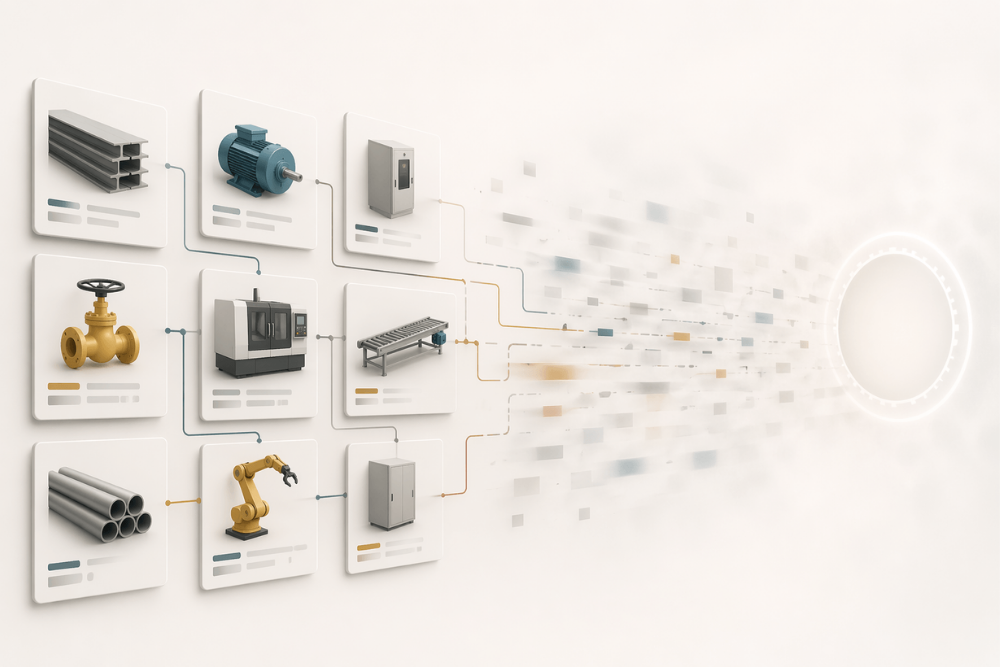
The Trap Looks Like “We Have Products”
Most manufacturer websites aren’t trying to be confusing. They’re usually trying to be helpful. The problem is that “helpful” often turns into “everything is everywhere.”
A contractor lands on your site looking for the right product for a job. A distributor is trying to confirm a spec, a fit or a category before they pass it along internally. They don’t need a tour of your company history. They need confidence that they’re in the right place, and a fast path to the right product.
When product presentation is weak, your website still gets traffic. It still looks fine. It still feels like it should be working. But behind the scenes, it creates friction that quietly kills momentum.
Why This Hits Manufacturers Of All Sizes
Small manufacturers often run lean. A lot of product knowledge lives in people’s heads, in PDFs, in email threads or in a salesperson who’s been there forever. That can work for long-standing relationships, but it breaks down when new buyers show up, or when a new contractor needs answers now.
Larger manufacturers have a different problem. The catalog grows, teams expand, pages pile up and suddenly nobody is sure where the “source of truth” lives. One product line has great detail. Another has a vague paragraph and a PDF that’s three clicks deep. The site becomes a patchwork.
Either way, the trap is the same. Your website becomes a place that proves you exist, but doesn’t help people move forward.
The Two Biggest Breakdowns
The first breakdown is unclear product categories. Buyers can’t tell where they belong. Product naming might make sense internally, but not to someone trying to solve a real-world jobsite problem. If a contractor has to guess which category applies, you’ve already added friction. If a distributor has to click around to confirm differences between two similar products, you’ve slowed them down.
The second breakdown is a blurry path to quote. This is where leads slip away quietly. If the site doesn’t make it obvious what the next step is, people default to the next vendor. Not because they dislike you, but because you made them work.
On the buyer side, the thought process is simple. If it’s hard to request pricing, it might be hard to get support, hard to order and hard to execute. That’s not a fair assumption, but it’s a human one.
What Contractors And Distributors Actually Need
Contractors are trying to keep projects moving. They want the right product, the right documentation and the right confidence to proceed. Distributors want clarity they can repeat. They need to know what it is, where it fits and how to position it without digging through a maze.
When your site makes that easy, you become the easiest manufacturer to do business with. That is a competitive advantage, even if your product quality is already top tier.
If your site makes it hard, your reps end up doing extra manual work. Answering questions that should be solved by the website. Sending PDFs by email. Explaining which product is which. Helping someone find the right form. That might feel normal, but it’s a sign your website is acting like a brochure, not a sales tool.
The Modern Reality: Less Unified Sales
A lot of manufacturers are working with independent reps, contracted sales teams or distributor networks. That’s the direction the market has moved in many industries, and it’s not going backward.
The downside is that your messaging can get diluted. Different reps explain things differently. Different distributors emphasize different features. Your website becomes the one place where you can create consistency, even when your sales model is distributed.
That’s why product presentation matters so much. It’s not only about leads. It’s about alignment.
The Resource Hub Factor For Long Projects
If your products show up in larger projects, your website needs to function like a resource hub, not just a catalog. Contractors and distributors often come back multiple times during a project. Early on they’re validating options. Later they’re confirming specs. Later they’re looking for install guidance, documentation or support details.
If those resources are hard to find, people don’t always ask. They improvise. They substitute. They choose a competitor that made the process easier.
That’s the silent cost of weak product presentation. It doesn’t always show up as a complaint. It shows up as a missed opportunity you never knew existed.
A Simple Self Check
If you want a fast way to evaluate your product presentation, don’t start with your homepage. Start with one product category page.
Can a contractor land there and understand what they should click next without guessing? Can a distributor quickly confirm what this product is for, and what to do if they want pricing or support? Is the next step obvious, or does it feel like a scavenger hunt?
If it feels even slightly unclear to you, it’s probably costing you more than you think.
The Bigger Point
Your website should make it easier to sell what you make. Not harder.
When your product categories are clear and your path to quote is obvious, your site stops being a passive presence and starts becoming a tool your whole sales ecosystem can rely on.
And when the sales ecosystem is less unified than it used to be, that reliability matters more than ever.
If you think your product presentation is creating friction, or your quote path feels blurry, reach out through the form below. We’ll take a look and tell you what we’re seeing.